First Aeroplane Flight in Canada
23 February 1909
Baddeck Victoria County Nova Scotia
Monument located in front of the Victoria County Courthouse
GPS location: 46°06’01″N 60°45’04″W
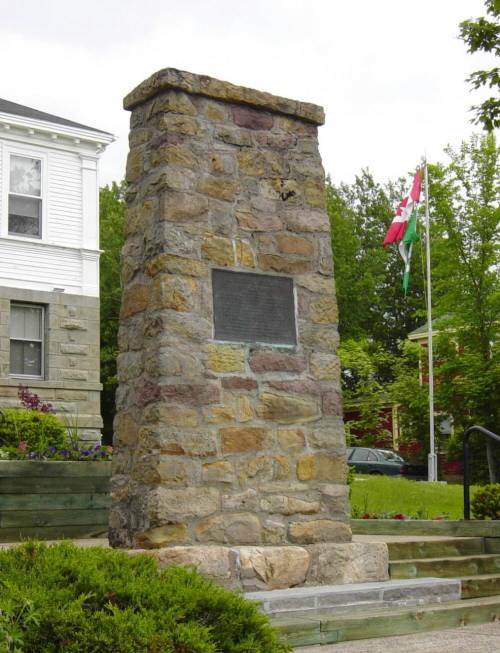
Photographed on 24 June 2003
23 February 1909 First Flight
On this day, members of the Aerial Experiment Association accomplished
the first manned airplane flight in Canada, by flying the Silver Dart over the
Bras d’Or Lake, near Baddeck, Nova Scotia. The A.E.A. was officially formed
in October 1907 on Mrs. Mabel Bell’s suggestion, and she contributed money to
pay for most of the expenses. It was headed by Alexander Graham Bell himself
and had as its members, four young men eager to make their mark during the
heady days of early flight:
* F.W. (Casey) Baldwin, the first Canadian and first British subject
to pilot a public flight (in Hammondsport, New York);
* Glenn H. Curtiss, a motorcycle manufacturer who would later be awarded
the Scientific American Trophy for the first official one-kilometre flight in the
Western hemisphere and became world-renowned as an airplane manufacturer;
* J.A.D. McCurdy; and
* Lieutenant Thomas Selfridge, an official observer from the U.S. government.
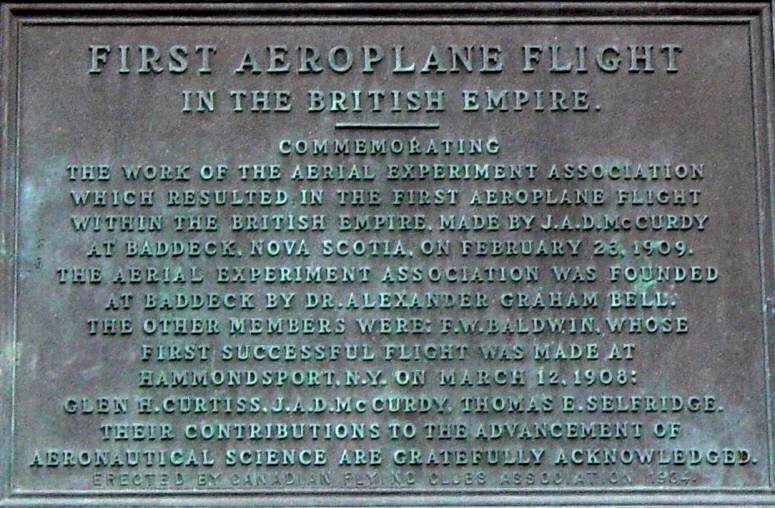
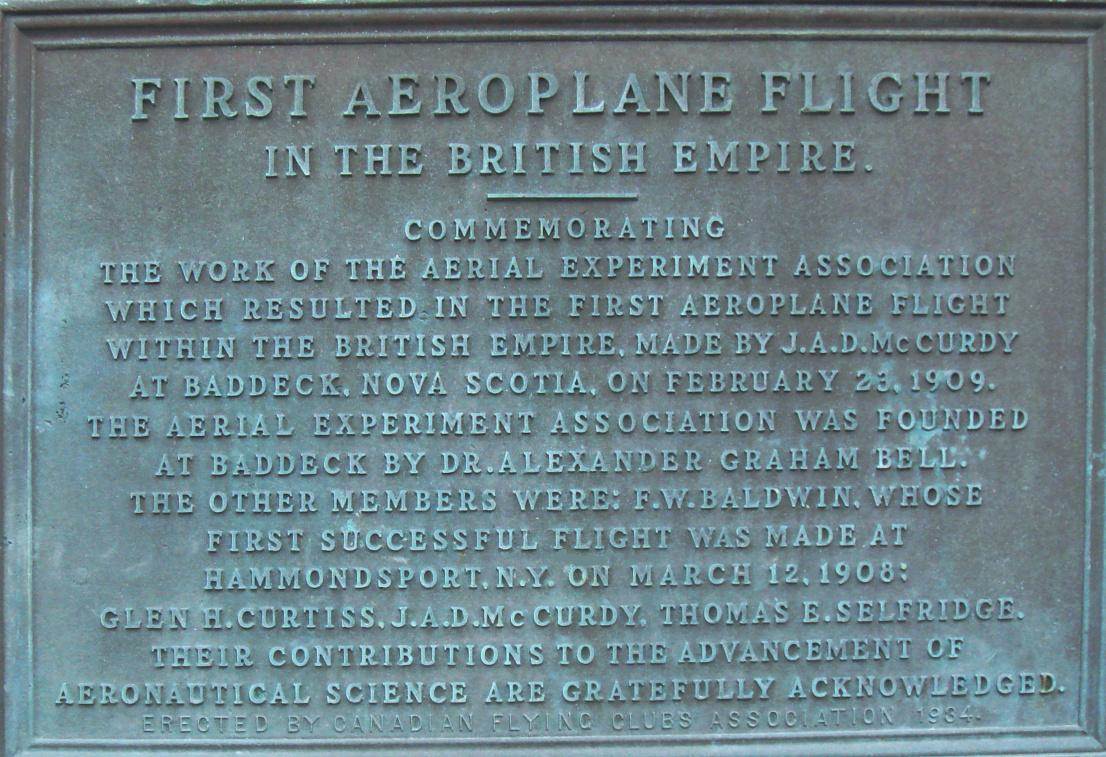
“First Aeroplane Flight in the British Empire”
Plaque erected by the Canadian Flying Clubs Association, 1934
Photographed on 24 June 2003
The flight at Baddeck on 23 February 1909, commemorated by this plaque,
was the first flight in Canada, and in the British Empire.
Eighteen weeks earlier, on 16 October 1908, Samuel Franklin Cody made
a flight of 1390 feet 424 metres over Laffin’s Plain, Farnborough, England,
which is recognized by the Royal Aero Club as the first powered flight in
England — but not in the British Empire, because the British Empire
consisted of terrirories other than the United Kingdom.
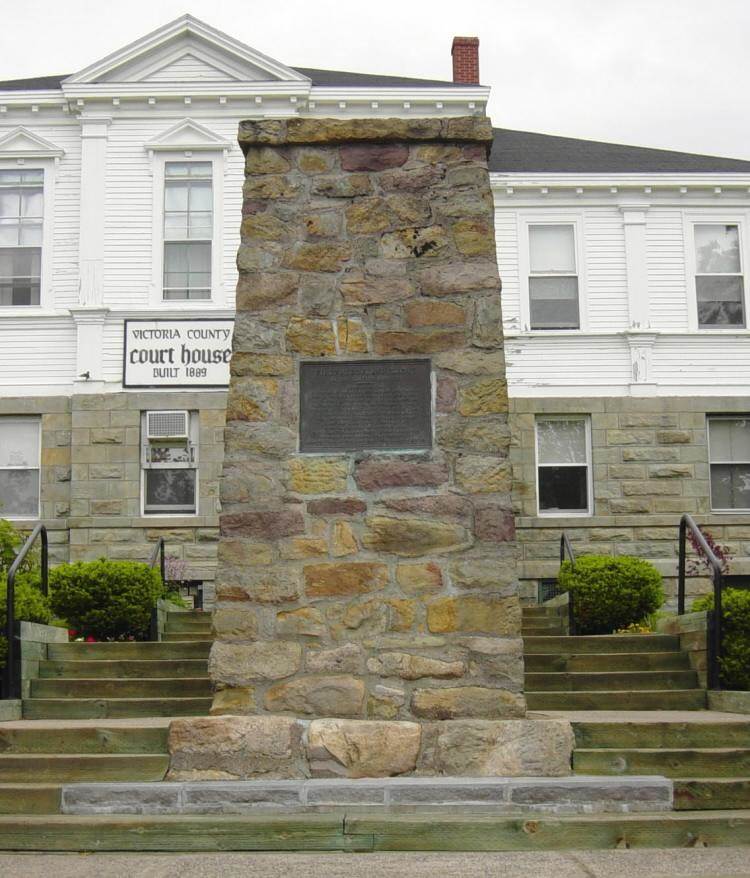
Photographed on 24 June 2003
Photographed on 13 November 2008
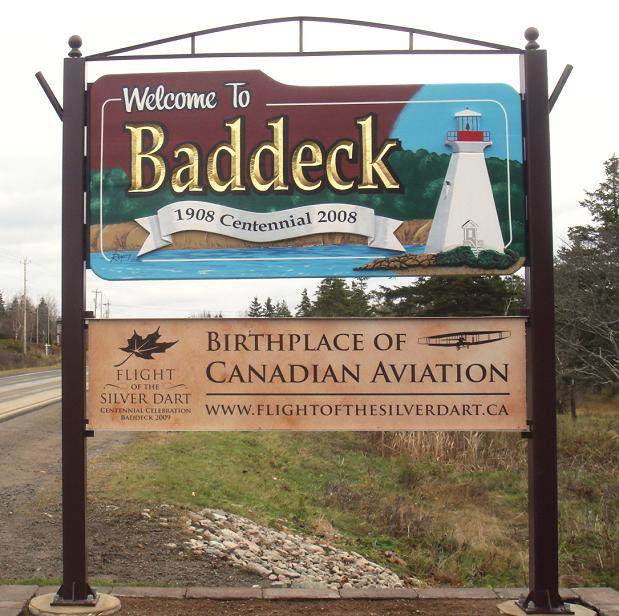
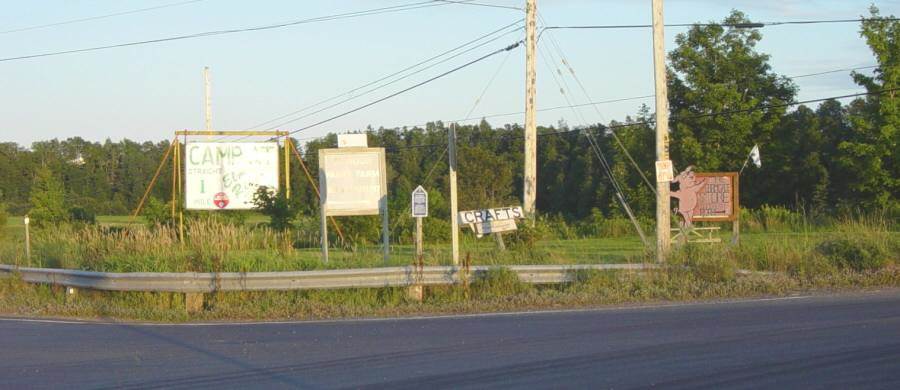
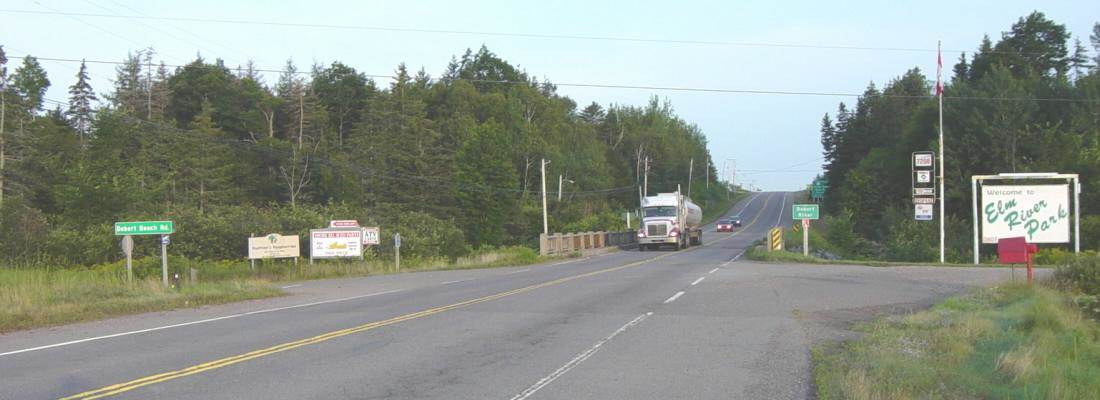
Highway sign commemorating the centennial of the Town of Baddeck, incorporated in 1908.
This sign is at the west entrance to Baddeck. Similar signs are located
at the north and east entrances to Baddeck.
Photographed on 13 November 2008
Also see: Three plaques at the Bell Museum
A.G. Bell, F.W. Baldwin, J.A.D. McCurdy
A.G. Bell National Historic Park
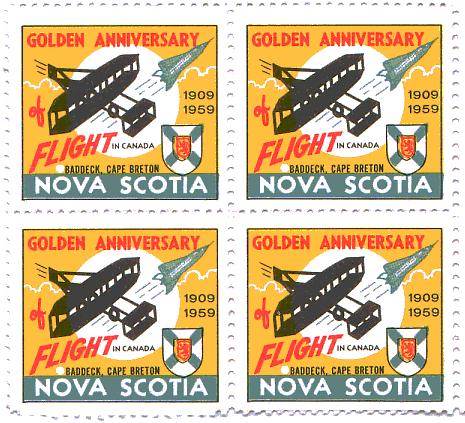
Fiftieth anniversary, 1959, of the first flight in Canada
Bain introduces bill on 100th anniversary of Silver Dart
5 November 2008
BADDECK, NS – To celebrate the 100th anniversary of the first powered flight in the British Empire by the Silver Dart, Victoria-The Lakes MLA Keith Bain today introduced a bill highlighting the importance of this aviation feat.
The bill highlights the contributions of the Aerial Experiment Association, headed by Alexander Graham Bell and Mabel Bell, along with Frederick W. “Casey” Baldwin, J. A. Douglas McCurdy, Lieutenant Thomas Selfridge and Glenn Curtiss.
The famed flight, piloted by Mr. McCurdy from the ice-covered Bras D’Or Lake in Baddeck on February23, 1909 brought the nation into the Age of Flight.
“This was an important milestone for our nation then and a proud heritage moment to celebrate 100years later,” Mr. Bain said. “Ilook forward to next year’s festivities to honour the pioneering spirit of the AEA – a group of enterprising and brave citizens of which we are still so proud.”
Source:— Bain introduces bill on 100th anniversary of Silver Dart
An Act to Celebrate the 100th Anniversary
of the First Powered Flight in the British Empire
by the Silver Dart in Nova Scotia
WHEREAS Nova Scotia is a province of many firsts;
AND WHEREAS the Aerial Experiment Association, formed in 1907, consisted of Alexander Graham Bell (chairman), Frederick W. “Casey” Baldwin (chief engineer), J. A. Douglas McCurdy (treasurer and assistant engineer), Lieutenant Thomas Selfridge (secretary) and Glenn H. Curtiss (director of experiments) and was financed by Mabel Bell;
AND WHEREAS the Association designed and built several airplanes, including the Silver Dart;
AND WHEREAS on February 23, 1909, the Silver Dart, piloted by Douglas McCurdy, flew from the ice-covered Bras d’Or Lake at Baddeck, in the County of Victoria in Cape Breton, Nova Scotia;
AND WHEREAS this flight was the first controlled powered flight of a heavier-than-air machine not only in Canada but in the British Empire;
AND WHEREAS the year 2009 is the one hundredth anniversary of this historic flight;
THEREFORE be it enacted by the Governor and Assembly as follows:
1 This Act may be cited as the Silver Dart 100th Anniversary Act.
2 Throughout the Province, the year 2009 shall be celebrated as the one hundredth anniversary of the first airplane flight in the British Empire by the Silver Dart in the Province.
3 This Act comes into force on such day as the Governor in Council orders and declares by proclamation.
Source:—
Bill No. 207: Silver Dart 100th Anniversary Act
Past and present meet in skies above Bell estate
by Nancy King The Cape Breton Post 3 October 2007
BEINN BHREAGH — When CF-18 fighter jets sped overhead at Alexander Graham Bell’s estate here Monday (1Oct.2007), it marked the meeting of the past and present of aeronautical achievement. The flyover celebrated the 100th anniversary of the founding of the Aerial Experiment Association, a group that formed with the intention of designing and construction a manned flying machine driven through the air by its own power.
Some descendants of the AEA’s founding members – who were Alexander Graham Bell and his wife Mabel, Frederick W. ‘Casey’ Baldwin, John A. Douglas McCurdy, Thomas Selfridge, Glenn Curtiss – were among those who assembled at the Bell estate, Beinn Bhreagh, to watch as the military aircraft flew past. They later gathered in a sitting room inside the home where members of the AEA likely often met to celebrate their accomplishments.
Grosvenor Blair, Bell’s great-grandson, told The Cape Breton Post he’s pleased to see the great contributions made by the AEA be acknowledged, noting the advances they accomplished included discovering ways to reduce air resistance.
“All of that was developed further by (Glenn) Curtiss at Hammondsport, (New York) but the genius started here and that’s, Ithink, finally being recognized,” Blair said.
Blair noted he had reviewed the Bell’s guest book, which dated back as far as1893, in which the names of AEA members often appear. “You see that that group, that group of six, was together long before they founded the actual association,” he said…
As Baldwin attended engineering studies at the University of Toronto, he proposed to a professor a thesis on mechanical flight and was told he should stop wasting his time on the field, noted his descendant, Sean Baldwin. “Ithink what ultimately happened here was a bit of sweet revenge,” hesaid.
Baldwin came to Baddeck first in 1906, he noted, adding he believed Baldwin found a synergy with his fellow AEA members, applying his mechanical and engineering skills to the ideas they conceived. “It was a little bit like a dream come true for a young engineer,” he said. “Ithink it’s a monumental achievement that these five men made…”
Source:—
http://www.capebretonpost.com/index.cfm?sid=67010&sc=145
Drawings of original Silver Dart from 1908 have helped in building of replica
by Rannie Gillis The Cape Breton Post 22 September 2008
How do you build a flying replica of the Silver Dart, an aircraft that took off from the frozen waters of Baddeck Bay almost 100 years ago?
You start with the original plans, preferably with the original engineering documents, that is if you can find them. For Doug Jermyn and the other volunteer members of the Aerial Experiment Association 2005 in Ontario, that involved quite a bit of research and investigation and the help and co-operation of several individuals and institutions. To start with, they were very lucky and that luck had a Cape Breton connection.
Inquiries at the Canadian Warplane Heritage Museum in Hamilton, Ontario, produced a set of drawings of the proposed aircraft, dating back to 1908. These illustrations belonged to Gordon McCrea of Baddeck, who had built two Silver Dart replicas and had been lent to the museum for research purposes. Doug and his friends were able to photocopy this important archival material and also made arrangements to send the originals back to Gordon.
Internet searches led to the Alexander Graham Bell archives at Cape Breton University, where they could view specific details relating to the construction of the Silver Dart’s wings, among other things, that would prove invaluable for their ambitious project. They also read many of Bell’s notes pertaining to the design and manufacture of the various components that went into this revolutionary aircraft.
The Canada Aviation Museum in Ottawa provided another set of original drawings and blueprints, which had been donated by J.A.D. (Douglas) McCurdy, the man who flew the original Silver Dart back in 1909. These drawings had been done on linen and were starting to show their age….
Source:—
http://www.capebretonpost.com/index.cfm?sid=173399&sc=150
Mabel Bell was a focal figure in the first flight of the Silver Dart
by Rannie Gillis The Cape Breton Post 29 September 2008
…The fact that the first flight in Canada actually took place almost 100 years ago was largely due to the financial contribution of Alexander Graham Bell’s wife Mabel, a very intelligent lady who usually preferred to stay in the background, while Bell and his largely male associates conducted their various scientific experiments.
It seems, however, that Mabel Bell had a genuine interest in the belief that a powered machine could actually fly, and she was willing to put up her own money in order to make it possible. How much money? How about $20,000, a very considerable amount at that time. (In today’s dollars that would equal about $450,000).
Back in1907 Mabel Bell sold off a piece of property and gave that amount of money to her husband and four other young men to form an association that would be called the Aerial Experiment Association (AEA). It’s purpose was to construct “a practical flying aerodrome or flying machine driven through the air by its own power and carrying a man.”
In addition to Graham Bell, the AEA also included a 21-year-old resident of Baddeck by the name of J.A.D. (Douglas) McCurdy. A recent mechanical engineering graduate of the University of Toronto, he had brought along to Baddeck his great friend Frederick ‘Casey’ Baldwin, who also had an engineering degree from the same university.
The other two members of the AEA, who also arrived in Baddeck in the summer of 1907, included: Lieutenant Thomas Selfridge, a young officer with the United States Army, who had been invited to the Bell Estate to observe the upcoming experiments with powered flight, and Glenn Curtiss, a young motorcycle enthusiast and inventor, who had been asked by Bell to build the 40horsepower engine that would power the Silver Dart…
Source:—
http://www.capebretonpost.com/index.cfm?sid=175549&sc=150
Dynamic four-man team worked tirelessly to build flying machines
by Rannie Gillis The Cape Breton Post 6 October 2008
“For many years I have been a student of what is being accomplished in relation to aerial flight and for many years my laboratory experiments have been directed mainly along lines leading up to aerial flight as a logical conclusion. I now have associated with me gentlemen who supplement by their technical knowledge my deficiencies and in this combination I now feel that we are strong, where before we were weak.”
It is hard to imagine that Alexander Graham Bell had any deficiencies, yet back in 1907 he was honest enough to admit he would need some expert engineering help if he was to build a successful flying machine. He might have been one of the world’s greatest scientific inventors, yet at the age of 60 he also realized he was too old to actually take part in any of the dangerous test flights that would be required in order to achieve success.
With this in mind, and with the considerable financial help of his wife Mabel, he and four eager and talented young men formed the Aerial Experiment Association. Douglas McCurdy, Casey Baldwin, Lieutenant Thomas Selfridge and Glenn Curtiss, were all encouraged to design and build their own biplanes, or two-winged flying machines.
Most of the work took place at Curtiss’s workshop in Hammondsport, N.Y., because it was there that Glenn Curtiss had built a reputation as an inventor of lightweight motorcycle engines. Curtiss, who was only29, had also built and raced primitive motorcycles, and in1907 he set a world motorcycle speed record of 136miles per hour [219km/h]!
By March, 1908, the group’s first powered biplane was ready to be tested. Called the Red Wing, after the red silk used to cover its wings, it was designed by Lieutenant Selfridge. On March12th of that year, with Casey Baldwin at the controls, the Red Wing flew from an ice-covered lake near Curtiss’s workshop. Baldwin thus became the first Canadian, and subject of the British Empire, to fly an airplane. Five days later, on its second flight, the Red Wing crashed on the ice. Fortunately, Casey Baldwin was not injured.
Two months later the group’s second biplane was ready for testing. It was called the White Wing, after the colour of the fabric used to cover the wings, and incorporated two significant aeronautical inventions. It was the first heavier than air machine in North America to have ailerons, which are movable control panels located at the tip of each wing. It also had a three-wheeled landing system, for taking off and landing from a grassy field.
Over a period of several days Baldwin, Selfridge and Curtiss each made a short test flight. However, during the fourth flight, with McCurdy at the controls, the White Wing crashed to the ground. Fortunately, McCurdy was only slightly injured.
One month later the group’s third biplane took to the air. It was called the June Bug, because it resembled the flying beetle of the same name. With Curtiss at the controls, it made several successful test flights, including one that covered a distance of 3,400 feet, or more than half a mile.
On July 4, 1908, the June Bug won the Scientific American trophy for making the first powered flight of more than one mile, when it flew 5,360 feet!…
Source:—
http://www.capebretonpost.com/index.cfm?sid=177784&sc=150
4 July 1908 June Bug flight = 5360 feet = 1.015 mile = 1.633km
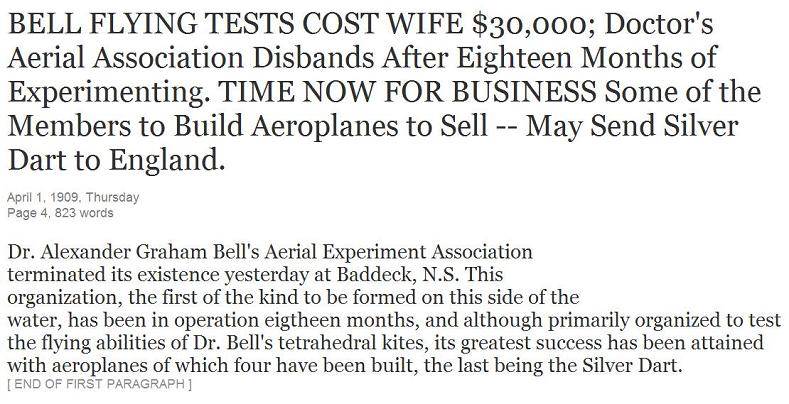
Aerial Association Disbands — New York Times, 1 April 1909
Douglas McCurdy’s historic flight aboard the Silver Dart
was the start of a long career in aviation
by Rannie Gillis The Cape Breton Post 20 October 2008
…When you are only 23 years old and you achieve instant fame as the first person to fly in Canada or the British Empire, what do you do for an encore? In1910 Douglas McCurdy became the first Canadian to receive a pilot’s license and one year later he made the first trans-oceanic flight, a distance of 94miles from Florida to Cuba. He went on to establish the first flying school in Canada and later helped establish the Royal Canadian Air Force. He would eventually serve as Lieutenant-Governor of Nova Scotia, from1947 to1952. Hedied in1961, at the age of75…
Source:—
http://www.capebretonpost.com/index.cfm?sid=181729&sc=150
Daring Feats by McCurdy
Hero of Flight Across Straits of Florida Delights Havana Crowd
The New York Times 1 February 1911
Special Cable to The New York Times
Havana, Jan. 31, 1911 — J.A.D. McCurdy, after his historic flight from Key West yesterday, made a magnificent flight in a Curtis biplane and performed some daring evolutions that aroused the enthusiasm of the thousands of Americans and Cubans who were present at the aviation meet.
The weather conditions were perfect for flying and an excellent exhibition was given by the aviators. McCurdy, who made the first flight today, startled the spectators by his sensational spiral twists, tilting his biplane over to a steep angle above the heads of the crowd, and reversing. Then he sailed close to the ground above the heads of the people and soared up again and cut figure eights at a considerable height.
A slight accident occurred while McCurdy was giving his exhibition. It was discovered in time and did not have any serious result. A strip of canvas which was torn off the upper plane streamed back, endangering the propeller, but McCurdy managed to land his machine safely.
After tearing off the loose canvas and examining the upper plane of his machine, McCurdy decided that the damage was unimportant and that the biplane was in condition to be safely used again. Beachy went up in the same machine and circled the field for sixteen miles. He was followed by Ward, who made a fine flight, rising 1200 feet in circles of six or seven miles. He went out over the sea for half a mile, remaining in the air for thirty minutes and descending with a magnificent glide during which he dipped under McCurdy, who was flying at right angles to him.
President Gomes and the British Minister were among the spectators.
Source:— The New York Times, 1 February 1911
http://www.nytimes.com/
Note: This newspaper report mentions these well-known early aviators:
Lincoln Beachey
James J. Ward
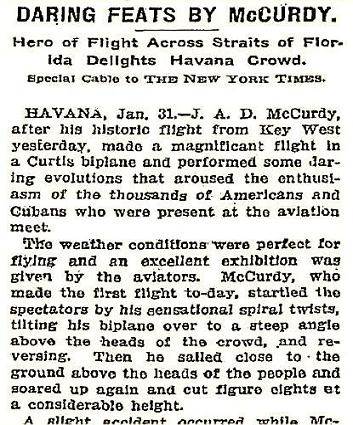
New York Times, 1 Feb 1911
The Extraordinary Escapades of Casey Baldwin
The Daily Observer, Pembroke, Ontario 8 November 2008
HALIFAX – On a crisp winter day 100 years ago, a team of aspiring aeronautical pioneers rolled an unusual contraption out onto the ice of Keuka Lake.
Nervously rubbing his hands, Casey Baldwin inhaled a deep breath of frosty air and then climbed into the cockpit of what was then called a “heavier-than-air machine.”
The fledgling Aerial Experiment Association (AEA) had come to the ice covered shores off Hammondsport, New York to test its inaugural aircraft, the “Red Wing” – a biplane constructed out of bamboo wood and red silk.
It was not the lake, however, that drew them to upstate New York, but a man named Glenn Curtiss. The American businessman, who became a partner in the Canadian aeronautical research group, manufactured single cylinder internal combustion engines. The association was trying to solve the biggest problem of early flight – the power-to-weight ratio. They believed the Curtiss engine was the answer.
Sitting in the pilot’s seat, an ordinary kitchen chair with the legs sawed off, Mr. Baldwin shouted instructions to the ground crew. As they pushed the Red Wing on its runners, the little engine fired. With the motor at full throttle, the craft lifted off, sailed effortlessly for 319feet (97metres) and then landed without incident.
The second flight, some 120 feet, ended in a crash, but it didn’t matter. On March12, 1908, Frederick Walker “Casey” Baldwin made history becoming the first Canadian to escape gravity and pilot an airplane. At the same time, the AEA had accomplished another important milestone. While few saw the Wright Brothers fly at Kitty Hawk, North Carolina five years earlier, the RedWing’s two jaunts into the air were the first public demonstrations of power aircraft flight in the United States.
Here in the Ottawa Valley, Casey Baldwin will forever be linked to the test flights of the Silver Dart at Camp Petawawa back in the summer of 1909. He and fellow engineering student John Douglas McCurdy conducted the first passenger flight in Canada at Petawawa.
As we approach the centennial of the Silver Dart’s historic flight, one man says few appreciate what Mr. Baldwin’s greatest accomplishment in aviation was. Yet, no aircraft, from a Cessna to the latest Airbus, could fly without his invention.
“The aileron is the greatest contribution to aviation,” insists Casey Baldwin, the grandson of the late engineer and pilot.
Discussing his grandfather’s legacy with The Daily Observer, Mr. Baldwin says he can understand historians overlooking the aileron. The 65-year-old grew up learning all about the man he still calls “Casey” and the storied friendship his grandfather had with Canada’s greatest scientist, Alexander Graham Bell.
“I realized by the age of ten the extraordinary things that granddad had worked on with his friend, Dr. Bell,” Mr. Baldwin remarks with an air of poignancy.
Sitting in his Halifax apartment, he sips his second cup of coffee of the day and leafs through some old records cataloguing his grandfather’s accomplishments.
It’s a family connection that Mr. Baldwin continues to foster. Although he rarely grants interviews, the veteran newsman occasionally assists documentary filmmakers and lends his expertise to museums and aeronautical associations. He still maintains the family home on the grounds of the famous Bell estate at Beinn Bhreagh near Baddeck, Nova Scotia.
It was here on the shores of the Bras d’Or Lake that the AEA was formed. In1906, Frederick Baldwin, then24, graduated from the University of Toronto with a degree in electrical and mechanical engineering and moved to Baddeck to work for Dr. Bell. The AEA charter was written after Dr. Bell’s wife, Mabel, agreed to finance the venture with $20,000 of her own money. It was an investment that paid off.
Ailerons, the hinged control surfaces attached to the trailing of the wing on an aircraft, are used to control the plane in a roll. The lack of lateral control complicated the flight of the RedWing. The AEA intended to correct this with the plane’s successor, the “White Wing”.
Three months after his historic flight, he was ready to test the aileron theory. Strapped in a harness, Mr. Baldwin piloted the craft using a joystick to control the aircraft. A yoke attached to the harness maneouvred flaps, or ailerons, at the end of each wing. When the pilot leaned to the right, the aileron on the left wing eased down allowing the biplane to execute a right bank.
Mr. Baldwin calls his grandfather’s early flights at Hammondsport the “critical breakthrough” that made aviation what it is today. Unfortunately, Mr. Curtiss engaged in a major multi-million dollar legal battle with Orville and Wilbur Wright over the patent for the aileron. The case was still in the courts in1917 when a settlement was reached whereby the U. S. government bought both parties out to make the patent universal.
Mr. Baldwin notes the ailerons used by the Wright Brothers were crude in comparison.
“Instead of the elegant little ailerons invented by the AEA, the Wright brothers twisted or warped the entire wing,” he explains. “They needed a complex system to twist the wings in either direction.”
His grandfather followed up the White Wing with construction of the “JuneBug”, which won him the prestigious Scientific American Award for making the first official one-kilometre flight in North America. It was the AEA’s next project, and Mr. Baldwin’s fourth airplane, that garnered the most attention, especially in Canada.
The Silver Dart actually flew ten times at Hammondsport after its initial flight on Dec.6, 1908. Then, Dr. Bell ordered Mr. Baldwin and Mr. McCurdy to ship the craft to Baddeck.
“Dr. Bell wanted one of the machines flown in Canada,” explains Mr. Baldwin.
On Feb. 23, 1909, the Silver Dart made the first controlled powered flight in Canada, and within the British Dominion, when it soared for half a mile over Bras d’Or Lake. Mr. McCurdy was at the controls.
In 1959, Mr. Baldwin watched a re-enactment of that famous flight. Broadcast live on CBC television, he remembers locals and dignitaries crowding the shores to catch a glimpse of the Silver Dart replica, piloted by Royal Canadian Air Force pilot Paul Hartling.
“It was a howling blizzard,” he recalls. “He took off in this vicious crosswind, got up 150feet and was nailed by a gust. The plane crashed on its starboard wing, but the pilot walked away.”
Although the AEA disbanded after the Silver Dart’s Bras d’Or Lake appearance, Mr. Baldwin’s grandfather and Mr. McCurdy exploring the possibilities of powered flight. They built two additional planes, the “BaddeckI” and the “BaddeckII” and prevailed upon the federal government to observe tests of their aircraft hoping they would recognize their military value. Those tests were scheduled for the summer at the newly established Camp Petawawa. As Mr. Baldwin notes, however, his grandfather had a tough selling job.
“Few in high places in Ottawa were interested in the demonstrations for the general opinion was that airplanes were of little practical use in warfare,” explains Mr. Baldwin.
Petawawa was a less than suitable site, however, the partners accepted the Militia Department’s invitation to conduct the tests there. The sandy landing strip at the camp would prove difficult for the aircraft, now equipped with landing gear made with two-inch [5cm] tires.
“The sandy terrain at Petawawa was quite unfit for these early vintage machines,” adds Mr. Baldwin. “In spite of these handicaps, four successful flights were accomplished.”
Shortly after 5am on Aug. 2, 1909, the Silver Dart, with Mr. McCurdy piloting, floated down the open field and rose into the air attaining a speed of 40miles an hour [65km/h]. Military brass and a small crowd of bureaucrats observed the initial flight with interest. After the biplane landed, Mr. Baldwin joined McCurdy in turning the craft around, and then jumped on board behind the pilot for a second sojourn into the skies, rising 10feet [3m] off the ground. Little did they know that they were making the first passenger flight in Canadian history.
“They fought so hard to get one man up,” Mr. Baldwin says of the unexpected milestone his grandfather achieved at Petawawa. “Getting two men up was notable. I mean now the new Airbus-180 can carry 600people.”
The two men made a third flight (with a mechanic also on board) and then a fourth. When Mr. McCurdy tried to land after the fifth flight, one of the plane’s wheels struck a knoll. The right wing touched the ground and was torn from the undercarriage. While the partners were uninjured in the crash, the damage had been done. The Silver Dart never flew again.
A few days later, the two men and their technicians assembled the BaddeckI. On Aug.12, the plane made one flight with the deputy minister of defence watching. Like the Silver Dart, it was heavily damaged upon landing. That ended the Petawawa demonstrations, however, military officials were impressed enough to recommend the government actively pursue the formation of a Canadian air force. Although it took politicians a little longer to act on the recommendation, Mr. Baldwin feels his grandfather’s work set the groundwork.
“Even though official Ottawa was shortsighted, the Petawawa military trials made a vital contribution to both the civilian and military explosion in aircraft development,” henotes…
Mr. Baldwin (has embraced) the family’s natural love of the sea. An avid racer, he once sailed with the America’s Cup Team and has crossed the North Atlantic twice – solo.
This month, he plans to navigate the Atlantic’s autumn gales when he joins a crew for a sailing expedition from Halifax to Rhode Island.
No matter the adventures he undertakes, Mr. Baldwin always remembers his famous namesake, the grandfather who challenged science and made his contribution to Canadian and world history…
Complete text;
http://www.thedailyobserver.ca/ArticleDisplay.aspx?e=1287512
More About the Silver Dart centennial
Silver Dart replica construction on schedule for anniversary
The Cape Breton Post, 18 June 2007
http://www.capebretonpost.com/index.cfm?sid=38095&sc=145
Plain sight
CF-18 jets, astronaut lend support to celebration of Bell aviation group
The Cape Breton Post, 1 October 2007
http://www.capebretonpost.com/index.cfm?sid=66694&sc=145
Astronaut brings her star power to AEA centennial
The Cape Breton Post, 3 October 2007
http://www.capebretonpost.com/index.cfm?sid=67009&sc=145
Plans for next year’s Silver Dart celebration coming into focus
One hundredth anniversary of historic flight coming up next year
The Cape Breton Post, 23 February 2008
http://www.capebretonpost.com/index.cfm?sid=110889&sc=149
Silver Dart Centennial Association to meet Sunday
The Cape Breton Post, 29 March 2008
http://www.capebretonpost.com/index.cfm?sid=121451&sc=149
Centennial celebration of historic flight of the Silver Dart launched
The Cape Breton Post, 16 August 2008
http://www.capebretonpost.com/index.cfm?sid=162748&sc=149
Volunteer group in Ontario working hard to complete replica of Silver Dart
The Cape Breton Post, 15 September 2008
http://www.capebretonpost.com/index.cfm?sid=171200&sc=150
Commemorating the day Canada took flight Toronto Star, 8Jan2009
http://www.thestar.com/Travel/article/562458
Canadian Centennial of Flight Canada Aviation Museum
http://www.aviation.technomuses.ca/visit_us/centennial_of_flight/
John A.D. McCurdy by J.M.S. Careless
http://epe.lac-bac.gc.ca/100/205/301/ic/cdc/heirloom_series/volume6/126-127.htm
John Alexander Douglas McCurdy Wikipedia
http://en.wikipedia.org/wiki/J.A.D._McCurdy
John Alexander Douglas McCurdy
http://collection.nlc-bnc.ca/100/200/301/ic/can_digital_collections/aviation/m039.htm
Aerial Experiment Association Chronology Parks Canada
http://www.pc.gc.ca/lhn-nhs/ns/grahambell/natcul/natcul4_e.asp
A brief history of Cuban aviation 5 Feb 1911: James McCurdy, Canadian pilot, made a spectacular
flight from the Military Camp of Columbia to the Morro Castle, in his 60HP Belmont biplane.
http://www.cubaaereo.com/pilot.asp?pg=history
The Silver Dart makes Canadian aviation history: a look back
Audio clip from the CBC archives – An interview with J.A.D. McCurdy, broadcast
on 23 February 1949, the 40th anniversary of the first flight of the Silver Dart at Baddeck
http://archives.cbc.ca/science_technology/aeronautics/clips/2424/
Canadian Aviation Historical Society, Silver Dart Chapter
http://www.cahs.com/Halifax/
First Airplane flight in Canada by U.S. Centennial of Flight Commission
http://www.centennialofflight.gov/essay/Wright_Bros/Patent_Battles/WR12G9.htm
Treasures of the APS: A.G. Bell on Powered Flight
Alexander Graham Bell’s address to the American Philosophical Society
on 7 May 1909, in Philadelphia, Pennsylvania…
http://www.amphilsoc.org/library/exhibits/treasures/flight.htm
Trial by Flyer
…Alexander Graham Bell invited Curtiss to visit him in Washington in January 1907 and
ordered a four-cylinder engine for his kite experiments. Meanwhile, Bell had received
a call from Selfridge, a young West Point graduate who had been studying flight and
believed the military would soon take it seriously. Bell invited Selfridge to Nova Scotia
to see his kites and to meet Mabel. The Bells took a liking to the earnest and personable
young officer, and welcomed him like a member of the family. Bell asked his friend
President Theodore Roosevelt to allow Selfridge to join him as an official aviation observer…
http://www.memagazine.org/supparch/flight03/trialby/trialby.html
Glenn Curtiss photographs, 1909 many taken at Baddeck
http://glennhcurtiss.com/id35.htm
Canada’s Aviation Hall of Fame
Canadian Centennial of Flight Canada’s Aviation Hall of Fame
http://www.cahf.ca/What%27s%20New/whatsnew.htm
The Beginning
The fragile aircraft Silver Dart shook loose the frozen bonds of Nova Scotia’s
Bras d’Or Lake in nineteen hundred nine to usher in this fledgling nation’s age of flight…
http://www.cahf.ca/Main/main.htm
Alexander Graham Bell (1847-1922)
http://www.cahf.ca/Members%20and%20Belt%20of%20Orion/
members/B_members.htm#Alexander%20Graham%20Bell
Frederick Walker Baldwin (1882-1948)
http://www.cahf.ca/Members%20and%20Belt%20of%20Orion/
members/B_members.htm#Frederick%20Walker%20Baldwin
John Alexander Douglas McCurdy (1886-1961)
http://www.cahf.ca/Members%20and%20Belt%20of%20Orion/
members/M_members.htm#John%20Alexander%20Douglas%20McCurdy
Gerald Lester MacInnis (1914-1991)
http://www.cahf.ca/Members%20and%20Belt%20of%20Orion/
members/M_members.htm#Gerald%20Lester%20MacInnis
Stuart Graham (1896-1976)
http://www.cahf.ca/Members%20and%20Belt%20of%20Orion/
members/G_members.htm#Stuart%20Graham
Lindsay Rood (1911- )
http://www.cahf.ca/Members%20and%20Belt%20of%20Orion/
members/R_members.htm#James%20Lindsay%20Rood
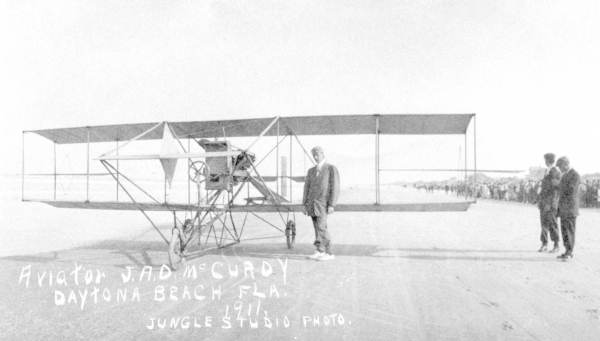
Photograph: 1911, J.A.D. McCurdy in front of his airplane, Daytona Beach, Florida
http://fpc.dos.state.fl.us/reference/rc13102.jpg
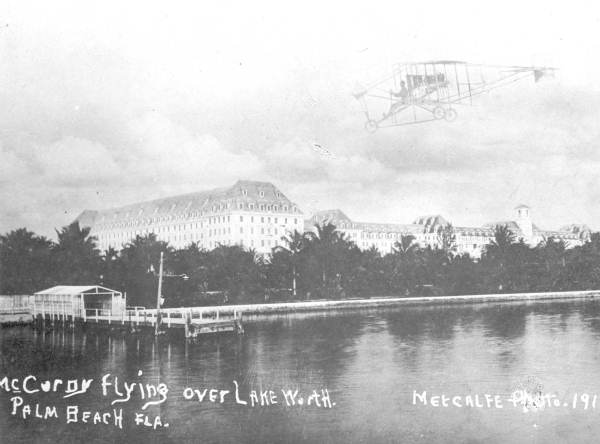
Photograph: 1911, J.A.D. McCurdy flying over Lake Worth, Palm Beach, Florida
http://fpc.dos.state.fl.us/reference/rc03147.jpg
John A.D. McCurdy in Florida, 1911
http://www.earlyaviators.com/emccurd2.htm